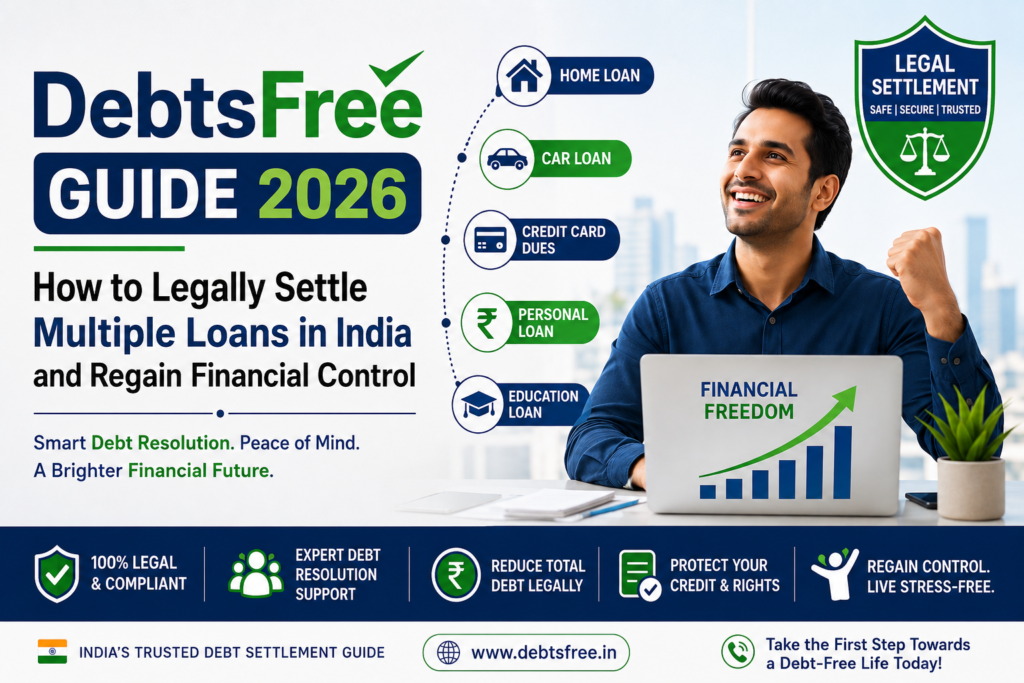

The retail credit landscape in India has transformed at an incredible pace. Fueled by advanced digital banking APIs, paperless verification systems, and instant smartphone loan apps, taking out personal credit is easier than it has ever been. However, this effortless access to liquidity has a major downside: the risk of falling into a complex multiple-debt trap.
When life brings unexpected challenges—such as corporate downsizing, a sudden medical emergency, or a major cash flow bottleneck in a business—managing multiple high-interest EMIs, credit card bills, and short-term loans can quickly become impossible.
As automated late fees and interest rates pile up, over-leveraged borrowers often panic and try to rotate credit or take on new loans to service old debts. Breaking out of this exhausting loop requires shifting away from temporary fixes and using a systematic, legally sound strategy. This guide details exactly how you can legally resolve multiple liabilities and rebuild a permanently debts free lifestyle.
1. Understanding Multiple Debt Portfolios and Bank Leverage
When you are managing multiple defaults across different banks and NBFCs, the stress can feel completely overwhelming. However, India’s financial regulatory framework provides consumers with significant legal leverage if you know how to use it.
Under strict Reserve Bank of India (RBI) rules, when a loan account or credit card bill remains unpaid for a continuous window of 90 days, the lender must classify it as a Non-Performing Asset (NPA).
Once an account hits NPA status, financial institutions are legally required to set aside a portion of their profits as a provisioning buffer against that bad debt. Because of this financial pressure, senior bank recovery teams become highly motivated to clear the non-performing account from their active ledgers. This operational window opens up a prime opportunity to negotiate a formal One-Time Settlement (OTS), which can slash your total outstanding balance by 40% to 70%.
Strategic Overview: Handling Multiple Lenders Simultaneously
| Debt Category | Default Priority Level | Strategic Debts Free Approach |
| Unsecured Personal Loans / Credit Cards | High Priority (Due to compounding interest rates up to 48% APR) | Negotiate an aggressive One-Time Settlement (OTS) to strip away extra penalties. |
| Secured Assets (Home / Vehicle Loans) | Medium Priority (Protected by underlying physical collateral) | Request a formal restructuring plan or an extension of the loan tenure to lower EMIs. |
| Digital Fintech App Loans | Immediate Priority (Due to intense automated collection tactics) | File a formal notice to stop privacy violations and close the debt with a lump sum. |
2. The 6-Step Implementation Framework for Multi-Loan Resolution
Successfully resolving a severe multiple-debt crisis requires following a highly disciplined, step-by-step procedural framework to ensure your final account closures remain legally watertight.
1.Forensic Statement Auditing:Phase 1.
Compile all active credit card and loan ledgers into a master dashboard to separate your true principal balance from artificial penalty fees.
2.Formal Representation Filing:Phase 2.
Send official notifications to all active creditors stating that professional counsel has been appointed to handle all future correspondence.
3.Hardship Portfolio Assembly:Phase 3.
Gather clear documentation of your financial challenges—such as medical bills, salary slip cuts, or business loss statements—to build a strong case for concession.
4.Written Sanction Verification:Phase 4.
Carefully check every clause of each bank’s official written settlement offer to confirm it explicitly states that all future legal claims are dropped.
5.Secure Remittance Processing:Phase 5.
Deposit your agreed settlement funds directly into the bank’s internal settlement pool account using secure, traceable electronic channels.
6.No Dues Certificate Retrieval:Phase 6.
Collect your formal No Dues Certificate (NDC) and ensure credit registries accurately update your profile to reflect that the debt is resolved.
3. Protecting Your Fundamental Consumer Rights
One of the most challenging parts of managing multiple defaults is handling aggressive collection tactics from various lenders at the same time. It is vital to understand that your fundamental right to privacy, safety, and dignity is completely protected by law under the RBI’s Fair Practice Code.
Recovery agents and third-party collection agencies are strictly prohibited from calling your relatives, contacting your workplace to cause social embarrassment, using abusive language, or calling outside the permitted hours of 8:00 AM to 7:00 PM. Working with professional advisors allows you to enforce these consumer rights immediately, halting illegal harassment so you can focus entirely on your financial recovery.
                  ┌─────────────────────────────────────────┐
                  │   Forensic Audit of All Active Debts    │
                  └────────────────────┬────────────────────┘
                                       │ (Identifies Real Principal)
                                       ▼
                  ┌─────────────────────────────────────────┐
                  │   Individual Written Sanction Letters   │
                  └────────────────────┬────────────────────┘
                                       │ (Locks in the Discounts)
                                       ▼
                  ┌─────────────────────────────────────────┐
                  │   Direct Pool Bank Remittance Tracks    │
                  └────────────────────┬────────────────────┘
                                       │ (Eliminates Legal Risks)
                                       ▼
                  ┌─────────────────────────────────────────┐
                  │    Definitive No Dues Certificates      │
                  └─────────────────────────────────────────┘
4. Rebuilding Post-Settlement Credit Health
A common concern among borrowers is the temporary dip their credit score experiences after a settlement, as bureaus mark these accounts with a “Settled” status instead of “Closed.” However, leaving multiple open loan accounts in active, compounding default hurts your financial profile far more than a single settled remark ever could.
Wiping out your open defaults drops your total debt utilization ratio down to zero and permanently eliminates the threat of ongoing legal action. Once your active liabilities are resolved, you can easily restore your credit rating back to an excellent 750+ level within 12 to 18 months by using a small secured credit card backed by a fixed deposit and paying the bill in full and on time every single month.
An Essential Message on Financial Recoveries: Financial difficulties can happen to anyone due to unexpected life events like a job transition, medical crisis, or business slowdown. A temporary cash crunch is simply a practical business problem to solve—it never defines your character, integrity, or personal worth. Taking a proactive, structured approach to resolve your liabilities is a sign of immense strength and responsibility.
Conclusion: Take Action to Reclaim Your Peace of Mind
You do not have to spend your life dealing with constant financial anxiety, sleepless nights, and intimidating recovery phone calls from multiple lenders. By steering clear of common settlement mistakes and leveraging established consumer protection rules, you can systematically remove the burden of unmanageable debt from your life.
Stop letting growing balances dictate your path forward. Take proactive control of your financial destiny today. Head over to Debts Free right now to receive a completely confidential evaluation of your current liabilities, discover your legal paths to resolution, and begin your journey toward a proud, organized, and permanently debts free lifestyle.