
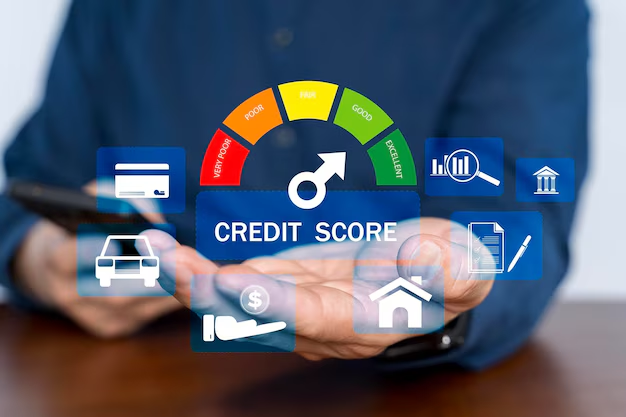
In the financial ecosystem of 2026, your credit score is more than just a number; it is your financial reputation. Whether you are recovering from a period of financial hardship or simply trying to optimize your borrowing power, managing your credit score is a critical skill.
For those who have navigated the waters of debt resolution, a common concern is the impact of settlement on their CIBIL or Experian scores. While a loan settlement provides immediate relief, it often leaves a “Settled” remark on your credit report that can linger for seven years. However, according to experts at DebtsFree.in, a low score is not a life sentence. With strategic management, you can rebuild your profile and once again become debt free and credit-worthy.
1. Deciphering the “Settled” Status
The first tip from any loan settlement expert is to understand exactly what your credit report is telling you. A loan marked as “Settled” means the lender accepted less than the full amount to close the account.
- The Impact: This can cause a score drop of 75 to 150 points.
- The Strategy: Don’t ignore it. Check your report to ensure the balance is shown as “Zero.” If a bank continues to report an outstanding balance after a settlement, it’s a reporting error that must be disputed immediately to prevent further score decay.
2. Rebuilding with Secured Credit Products
When your score is low, traditional banks may hesitate to offer unsecured loans. Experts suggest “Starter Loans” or secured products to kickstart the recovery of a debts free individual.
- Secured Credit Cards: These are issued against a Fixed Deposit (FD). Since the bank has collateral, they are easy to get.
- The Expert Secret: Use the card for small, routine expenses (like utility bills) and pay the bill in full every month. This creates a fresh trail of positive payment history that eventually “dilutes” the impact of the past settlement.
3. The 30% Utilization Rule
Your credit utilization ratio—how much of your available credit you use—is the second most important factor in your score.
- The Goal: Keep your utilization below 30%. If you have a credit card with a limit of ₹50,000, try not to spend more than ₹15,000 on it.
- Why it matters: High utilization signals to lenders that you are “credit-hungry” or financially strained. By keeping this low, you prove you are managing your debt free status with discipline.
4. Diversify Your Credit Mix
Lenders like to see that you can handle different types of credit responsibly. A mix of secured loans (like an auto loan) and unsecured credit (like a small personal loan) can positively influence your score over time.
Expert Tip: If you only have credit cards, consider a small consumer durable loan for an appliance. Repaying it perfectly over 6-12 months can provide a significant boost to your score as you transition to a completely debts free life.
5. Audit and Dispute Errors Regularly
In 2026, digital reporting errors are more common than you might think. A loan you settled might still show as “Defaulted” due to a technical glitch between the bank and the bureau.
- Action Plan: Obtain your free credit report annually from bureaus like CIBIL or Experian.
- Dispute Process: If you find an error, use your No Dues Certificate (NDC) or Settlement Letter as evidence to file a dispute. Correcting a single error can sometimes jump your score by 50+ points overnight.
6. The “Old is Gold” Principle
It might be tempting to close all your credit card accounts once you become debt free, but experts advise against it.
- Length of History: The age of your oldest account contributes to your score.
- Expert Advice: Keep your oldest credit card active, even if you don’t use it frequently. Closing it shortens your credit history and can inadvertently lower your score.
7. Patience: The 24-Month Recovery Window
Rebuilding a credit score after a settlement is a marathon, not a sprint. While the “Settled” remark stays for seven years, its negative impact begins to fade after 12 to 24 months of perfect payment behavior on other accounts.
Conclusion
Managing your credit score after a loan settlement requires a shift in mindset. You are no longer just “paying back”; you are “building up.” By following these expert tips—utilizing secured credit, maintaining low utilization, and auditing your reports—you can navigate your way back to a high score.
If you are currently struggling with unmanageable debt and are worried about your credit future, consult a loan settlement expert at DebtsFree.in. They can help you settle your dues the right way, ensuring you have the documentation needed to rebuild your life and stay permanently debts free.