
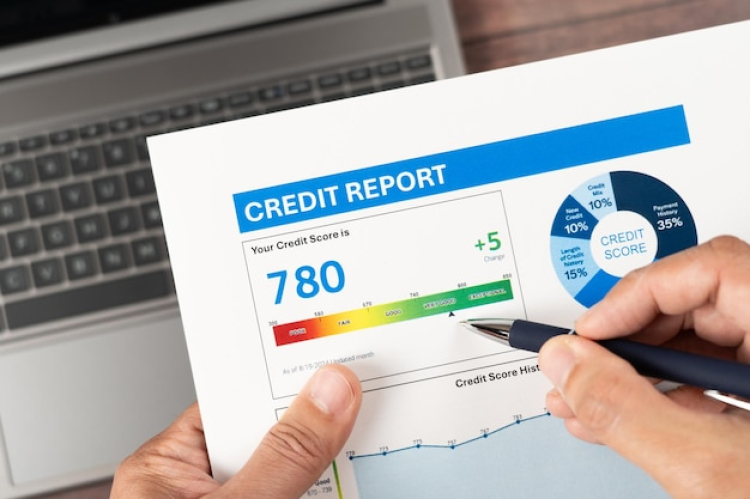
In the pursuit of financial freedom, the word “settlement” often carries a heavy weight. For many individuals in India struggling with high-interest personal loans, a loan settlement is the only viable exit strategy to escape a mounting mountain of debt. However, a common fear keeps people trapped: “Will this ruin my CIBIL score forever?”
Understanding the intersection between debt relief and credit reporting is essential. To become truly debts free, you must be willing to navigate the short-term impact on your credit score for the sake of long-term financial health.
The Difference Between ‘Closed’ and ‘Settled’
When you check your CIBIL report, the “Account Status” section is the most important field. If you pay back your loan in full according to the original terms, the status is marked as “Closed.” This is the ideal scenario for a high credit score.
However, when you opt for a loan settlement, the bank agrees to accept a lower amount than what was originally owed. In this case, CIBIL marks the account as “Settled.”
Why the Status Matters
From the perspective of CIBIL and future lenders, a “Settled” status indicates that you were unable to fulfill the original loan agreement. Consequently, your credit score will take a hit—often dropping by 70 to 100 points immediately after the settlement is reported. While this sounds daunting, it is important to remember that a “Settled” status is infinitely better than a “Written-Off” or “Default” status, which indicates you made no effort to pay at all.
Why a Temporary Score Drop is Worth It
If your debt is ballooning due to interest and penalties, your score is likely already suffering due to missed payments and high credit utilization. Staying in a debt trap just to “save” a score that is already falling is a losing battle.
By choosing a loan settlement, you stop the accumulation of late fees and penal interest. You gain the liquidity needed to build an emergency fund, which is the foundation of staying debts free in the future. A credit score is a living number; it can be rebuilt. Your mental health and financial stability, once broken, are much harder to repair.
What to Do After a Loan Settlement: The Rebuilding Phase
Once you have successfully completed your loan settlement and received your No Dues Certificate (NDC), the clock starts on your financial recovery. Here is how you can climb back to a 750+ score while remaining debts free.
1. Verification of the Report
Wait about 45 to 60 days after your settlement and check your CIBIL report. Ensure the account is correctly marked as “Settled” and that the balance is shown as zero. If the bank continues to report an “Outstanding Balance,” file a dispute with CIBIL immediately using your NDC as proof.
2. The “Secured Credit” Strategy
Since a recent settlement might make it hard to get an unsecured credit card, look into Secured Credit Cards. These are issued against a Fixed Deposit (FD). By using the card for small, essential purchases and paying the bill in full every month, you demonstrate “new” positive credit behavior. This is one of the fastest ways to show lenders you are now disciplined and debts free of old burdens.
3. Maintain a Healthy Credit Mix
Over time, adding a small consumer durable loan (like an EMI for a laptop or fridge) and paying it off meticulously can help diversify your credit mix. However, only do this if you have the cash on hand to pay it off. The goal is to use credit as a tool to boost your score, not as a crutch for your lifestyle.
4. Zero Utilization is Your Best Friend
To stay debts free, avoid the temptation of “revolving” credit. Keep your credit utilization below 10% on any new cards. This tells the credit bureaus that you have access to credit but are not “credit-hungry”—a major factor in boosting your score back into the “Excellent” range.
Professional Guidance: Getting it Right the First Time
The impact of a loan settlement on your CIBIL score can be minimized if the negotiation is handled professionally. Experienced debt relief experts can help ensure that the settlement terms are reported in the least damaging way possible and that all legal paperwork is airtight.
They provide the shield you need against aggressive recovery tactics, allowing you to focus on the future. Remember, the ultimate goal isn’t just a high number on a report; it’s the freedom of being debts free.
Conclusion
A loan settlement is a detour on your financial journey, not a dead end. While it does affect your CIBIL score in the short term, it provides the “reset” necessary to stop a downward spiral.
By taking control of your debt today, you are choosing a path that leads to a future where you own your income and your peace of mind. Your credit score will recover as you practice the habits of a debts free life. Don’t let the fear of a temporary dip stop you from achieving permanent freedom.